

























If you have ever wondered about the calorie content of tea with milk & sugar then, you are not alone. It’s a frequent question one may have if one likes to drink tea on daily basis and you are looking to control your calorie intake a bit. Plain black tea is naturally very low-calorie, but sugar and milk can add up to a lot of calories for each cup. This is why knowing the calorie content of tea with milk and sugar is helpful, especially if you want to lose weight or just be more conscious about your diet and choices in drinks.
A regular cup of tea with milk and sugar has approximately 25 to 50 calories on average, depending upon how much you add milk, how many teaspoons of sugar you use, and the size of your cup. A smaller teacup, for instance, can pack fewer calories; a larger mug with added sugar and milk, more. The tea itself, in most cases, provides nearly no calories. Most of the calories come from whatever you add to it, like sugar and whole milk.
In this article, you will discover the calorie count of tea with milk and sugar, what contributes to the total count and how you can enjoy your cup of tea while not consuming too many additional calories.
Calories in tea with milk and sugar
A typical cup of tea with milk and sugar might be in one of these common ranges:
- Light tea: 1 teaspoon sugar + 1 tablespoon milk = roughly 25 to 30 calories
- Regular tea: 1 teaspoon sugar + 2 tablespoons milk = approximately 30 to 35 calories
- Sweet, creamy tea: 2 teaspoons sugar + 2 tablespoons milk = roughly 45 to 50 calories
- Bigger mug with extra milk and sugar: sometimes 40 to 65 calories, based on recipe
Why calorie counts for tea with milk and sugar vary so much
Tea with milk and sugar can have a wide range of calories since there is no recipe everyone follows. Some drink just a splash of milk and one teaspoon of sugar, while others prefer a cup that is stronger, creamier and sweeter. Though their namesake beverages have milk and sugar, the overall calories in each can vary wildly. Plain brewed tea has virtually no calories by itself, so most of the calories are from the milk and sugar added to it. This is the key reason why different websites (and calorie calculators) often differ on the same drink.
There are several factors that influence the calorie count:
- Amount of sugar: More sugar = more calories in cup.
- Amount of milk: A tiny splash has fewer calories than a healthy pour.
- Milk type: Whole milk contains more calories than low-fat or skim.
- Cup size: A big mug almost always contains more calories than a little teacup.
- Preparation method: Tea which is boiled with milk and sugar generally contains more calories than tea prepared separately and mixed afterwards.
- Additional ingredients: creams, condensed milk or flavored syrups and spices can further alter the caloric value.
That is why the calories in tea with milk and sugar are never literally congruent for each cup.
Ingredient-by-Ingredient Calorie Breakdown
To discover the calories in tea with milk and sugar, it is useful to examine each ingredient individually. Brewed tea plain has very few calories so the majority of the calorie load comes from the things we put in it. The type and amount of sugar, the kind and quantity of milk used can all affect that final total significantly. By breaking it down ingredient-by-ingredient, it is much easier to estimate how many calories are in your daily cup.
1. Plain Tea
Just it is quite low in calories by nature. On its own, it adds near-zero calories to the total tally. And this is why a plain tea is generally seen as a light beverage.
2. Sugar
And one of the largest contributors to tea’s calories is sugar. Just a little spoon lifts the total fast. The sugar content increases with the more you add, and if you drink multiple cups a day this will become a significant number of calories.”
3. Milk
Milk gives tea creaminess — and calories. A little splash contributes only a few calories, while more of a pour can make quite the difference in the grand total. Whole milk typically has more calories than low-fat or skim milk.
4. Extra Ingredients
Others also mix in cream, condensed milk, honey or flavored syrups. These ingredients can further increase the calorie count while making the tea more decadent.
Essentially, there are not many calories to be had in the tea itself. The bulk of the calories comes from the milk, sugar and any added ingredients stirred into the cup.
Estimated Calories by Common Tea Recipe
The total calorie count in tea with milk and sugar can average out based on the preparation of the tea. A light cuppa, with just a dash of milk and one teaspoon of sugar will have fewer calories than a richer, creamier tea brewed with added sugar. That’s why there is no one-size-fits-all calorie number per cup. Plain tea, on the other hand, adds very few calories in most cases, and the total comes down largely to how much milk and sugar you add. Just by considering classical tea recipes, one should be more able to estimate the calorie content of your daily cup and to select a version fitting for your health or excess weight objectives.
Here are some rough calorie ranges you can expect for most tea recipes:
- Plain black tea: Nearly zero calories, because brewed tea is just naturally super-low in calories.
- Tea with 1 teaspoon of sugar: Usually about 15 to 20 calories, depending on the size of the cup.
- Tea with milk and 1 sugar: Usually about 25 to 35 calories depending on how much milk you add.
- Tea with milk and 2 sugars: Approximately 35 to 50 calories, depending on the tea density.
- Light tea with a splash of milk: About 10 to 20 calories, if no sugar is put.
- Creamy tea with extra milk and sugar: Could be as many as 40 to 60 calories or more.
- Indian-style milk tea or chai: Typically has 50 to 80 calories per cup, based on the type of milk, amount of sugar and method of preparation.
These numbers are only estimates, but they provide a real-world sense of how quickly calories can pile up with additional milk and sugar. A cup is not much, but multiple cups of tea consumed several times a day can lead to a significant number of calories over time.
Calories in one cup of tea with milk and sugar
One serving of tea with milk and sugar can be high in calories, depending on how much you add. Generally 1 regular cup of tea with sugar and milk has about 25 to 50 calories. Plain tea is itself quite low in calories, so a lot of the caloric content comes from what you add into the tea in terms of milk and sugar. For example, a cup prepared with a little milk and only one teaspoon of sugar will have fewer calories in it than a stronger, creamier tea with two teaspoons of sweetener. And this is why there isn’t just one number that applies to every cup.
Cup size makes a difference too, since a bigger mug generally has more milk and sugar than a tiny teacup does. If you consume tea occasionally, those calories might not feel very meaningful. But it can add up over time if you’re having two or three cups every day — and so are not the only ones. While releasing the number of calories tea with milk and sugar, knowing it will help you to choose better food especially when we try to lose weight or if you are monitoring your daily intake also want to reduce your added sugar.
Key points of Calories
- Plain tea: almost no calories
- Tea with milk and 1 teaspoon sugar: 25 to 35 calories
- Milk and 2 teaspoon sugars with tea: about 35 to 50 calories
- More milk = more calories
- More sugar = more calories
- Large cup or mug: more likely to have more calories than a small cup
Calories in Indian tea with milk and sugar
If you drink Indian-style milk tea or chai, the calorie count can be high compared to standard English tea as the quantity of milk is often larger and sugar can be more liberally used.
And many Indian households boil tea with milk, not just adding a splash at the end. That pushes a cup into the 35 to 50 calorie range, and sweeter varieties can go even higher. Some pages in the current search results quote 30 calories, while others exceed 50 calories, again, because the recipes are different.
So if your tea is brewed by steeping tea leaves, water, milk and sugar together, you likely are not drinking the same type of cup as a lighter brew with only a teaspoon of milk tossed in post-brew.
How much do milk type and milk quantity matter
A lot, more than most people realise.
Whole milk makes tea taste better, but it adds more calories as well. Low-fat milk and skim milk lower the total. Data associated with the United States Department of Agriculture indicates that skim and reduced-fat milk has fewer calories in a cup than whole milk, and calorie-tracking sources created for tea drinkers say switching to skim can significantly lower the total in a single cup.
Here is the practical takeaway:
- 1 tablespoon whole milk: about 9 calories
- 2 tablespoons whole milk: roughly 18 calories
- 3 tablespoons whole milk: about 27 calories
Even before sugar, a “milky” tea can quietly add 20 to 30 calories.
To put the effect in perspective, if you drink tea twice a day, that added milk alone can end up making a visual difference on your body over a week or month.
How much do sugar and sweetness level matter
Sugar is more important than milk.
One teaspoon is 16 calories. Two teaspoons are 32 calories. Three teaspoons are 48 calories. In small drinks like tea, sugar often winds up being the largest source of calories (even more so than milk when added).
That is also why tea can seem so misleadingly healthy. The drink is low in calories base, but those spoonfuls of sugar add to the nutrition profile quickly.
The sugars added to drinks are classed as free sugars, according to the NHS, and they recommend that no more than 5% of daily energy intake should come from free sugars. The NHS also advises that regularly having too much sugar can lead to weight gain and decay of the teeth.
So if you’re having two or three sweet cups of tea as daily habit, it may not be extreme in calories in a single serving, but the sugar habit can pile up.
Is tea with milk and sugar healthy
It can be included in a balanced diet, but the answer is “Yes” based on quantity.
Plain tea itself is generally a low-calorie beverage, and the population of polyphenols and other compounds in tea are linked to health benefits. Regular teas are packed with beneficial plant compounds, according to Harvard, but their precise combination varies by the sort of tea. At the same time, Harvard also notes that when you add a lot of sweetener and cream, you do raise the drink’s calorie, fat and sugar load.
So tea with milk and sugar isn’t inherently unhealthy. The problem is with portion control and frequency.
One cup with little sugar and milk is far different from:
- three large mugs a day,
- two teaspoons of sugar from each,
- plus a heavy pour of milk.
The second pattern can silently add hundreds of calories a week.
Is tea with milk and sugar good for weight loss
It can be part of a weight-loss plan, so long as the recipe is controlled.
If your tea has 25 to 35 calories, it’s not a big issue on its own. But if each cup has 45 to 60 calories and you have two or three cups every day, the number adds up. Three 50-calorie cups a day add up to 150 calories daily, or roughly 1,050 calories a week. That is plenty to slow fat loss for some people, particularly when mixed with snacks. The calorie math here is based about the ingredient values above.
For weight loss, quitting tea may not be the best approach. The point is to cut down on what gets added to the tea.
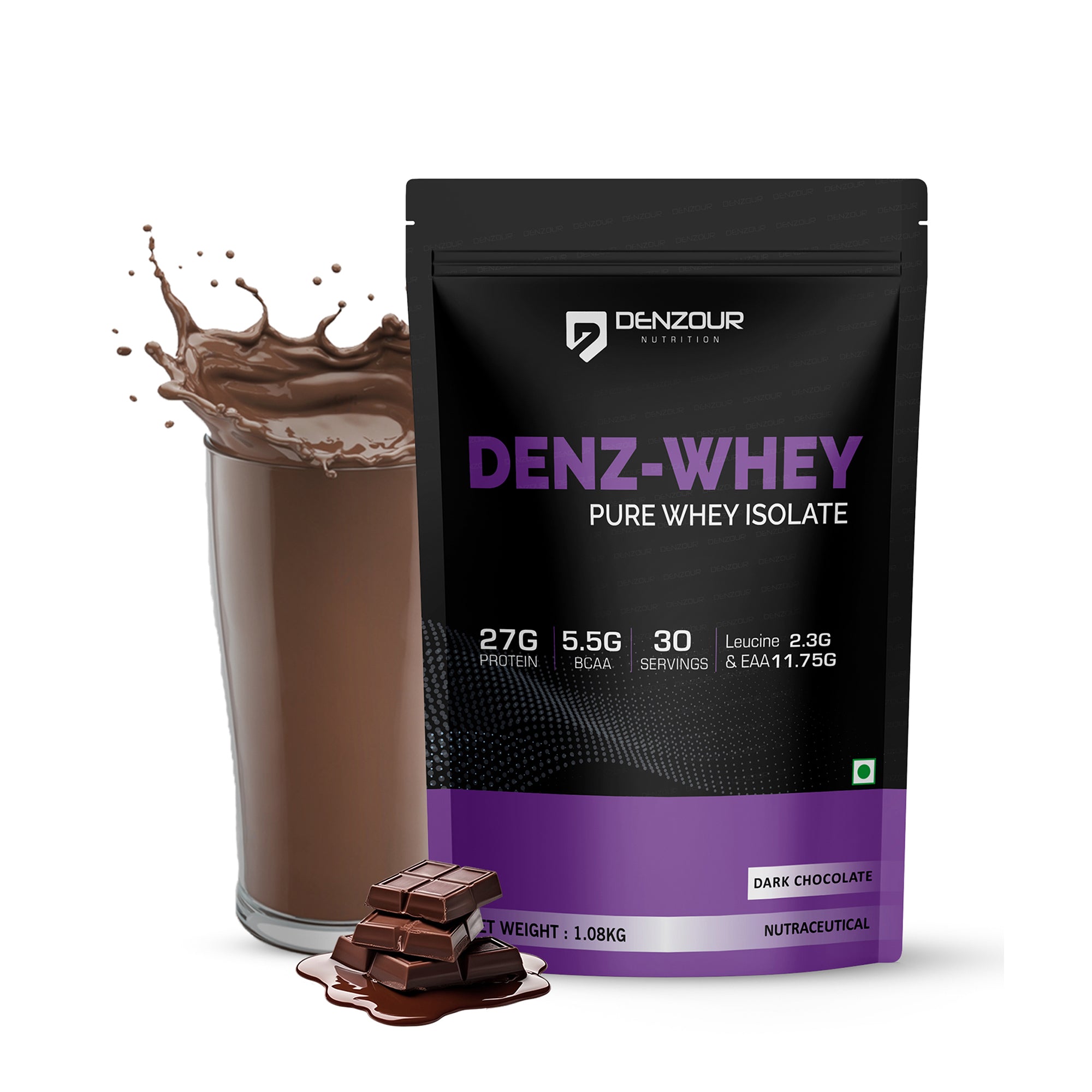
These smart beverage choices paired with high-protein nutrition such as Denzour Whey Isolate can help make your calorie reduction routine easier to follow through.

Pure Whey Isolate Protein Powder
Final Takeaway
Tea with milk and sugar may seem like a light everyday drink but its calorie content can differ by more than is often realised. Whereas plain tea has virtually no calories, the milk and sugar you pour into it can rapidly boost the total. In most cases one cup of tea with milk and sugar has approximately 25 to 50 calories based on the quantity of milk, number of teaspoons added, and the size of the cup. A lightly brewed tea will be lower in calories, and a creamier and sweeter cup of the liquid would inevitably have more.
The good news is that you don’t need to ditch tea in order to keep track of your calorie intake. Cutting down to a smaller amount of sugar, using less milk or ordering a smaller cup will help you have your beloved beverage without too many added calories throughout the day. The trick is to be mindful of what you put into your cup. Ultimately it is not the tea itself that’s the issue — it is the milk and sugar that have a bigger impact.


