








When choosing the correct supplement for growth, recovery, and exercise support, EAA vs BCAA can be a bit confusing. Amino acid supplements, particularly BCAA and EAA, help improve training performance through recovery process.
BCAA has three of the essential amino acids while EAA has all nine that your body cannot create on its own. This distinction is important as your body requires the full complement of essential amino acids to rebuild and help muscles function. The right one for you depends on your goals, daily diet, workout style and recovery needs.
This comparison may help if you train regularly and wish to keep muscle on while losing fat, or simply want to know which of the two supplements work better with your routine. In this guide you will learn what EAA and BCAA are, how they function, their benefits and which one may be more favorable for your fitness journey.
What Is EAA?
EAA: Essential Amino Acids These are the amino acids your body requires for important things such as muscle repair, muscle growth, recovery and overall health. They are called “essential” because your body cannot produce them on its own, so you need to consume them through food or supplements.
9 essential amino acids in total. They also aid in protein formation, help muscles recover from exercise and preserve lean muscle mass. This explains the popularity of EAA supplements among gym enthusiasts, athletes, and active individuals.
There’s a simple way to think of EAA: Imagine protein as the construction material for your muscles, and essential amino acids are the most important parts needed to build it correctly. Insufficient EAAs and your body will be unable to recover or perform optimally.
Foods high in EAAs include eggs, dairy, meat and fish as well as soy → good quality EAA supplement
The 9 essential amino acids are:
- Leucine – influences muscle protein synthesis
- Isoleucine – aids in energy and recovery
- Valine – supports muscle repair
- Lysine – helps tissue growth
- Methionine – supports metabolism
- Phenylalanine – Makes brain chemicals needed for learning
- Threonine – supports protein balance
- Tryptophan – aids mood and sleep functions
- Histidine — promotes growth and repair of tissues

Denzour Nutrition EAA Intra Workout
What Is BCAA?
Branched-Chain Amino Acids (BCAA) These three amino acids are considered essential because your body can’t produce them, and so you need to obtain them through diet or supplements. Thus, BCAAs are deployed in the fitness industry because of their association with muscle recovery, workout support and muscle maintenance.
They are known as “branched chains” because of their chemical makeup. Many people take a BCAA supplement pre-, intra- and post-workout to support training performance and minimize muscle breakdown during hard training. BCAAs are particularly popular with gym-goers, athletes and regular exercisers.
Simply put, BCAA is supportive of your muscle in physical stress due to exercise. However, BCAAs represent only a third of the full group of essential amino acids—not the complete set.
The 3 BCAAs are:
- Leucine – Serves to help with muscle protein synthesis and muscle repair.
- Isoleucine – Adds to energy utilization and muscle recovery.
- Valine – aids in endurance, recovery & muscle support.

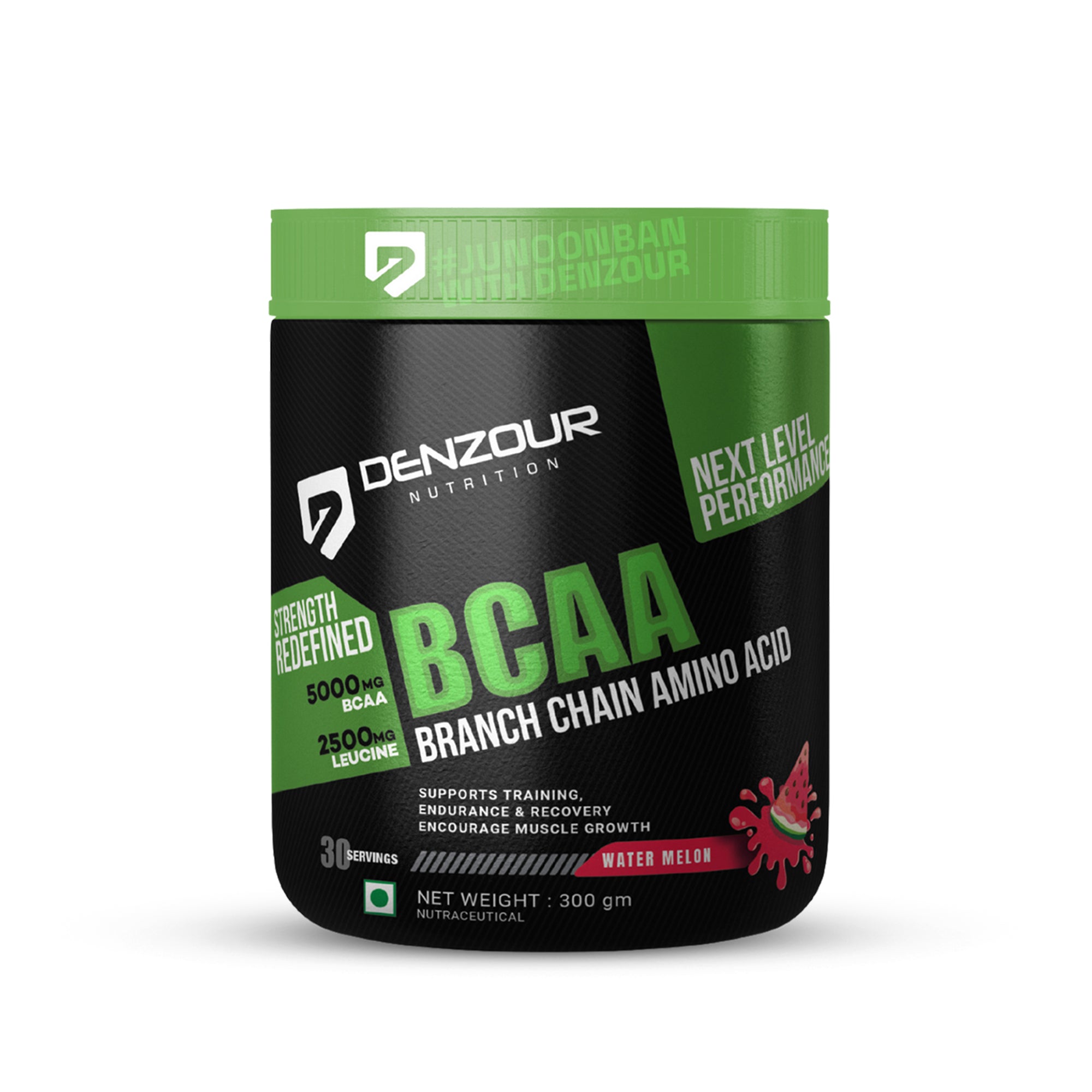
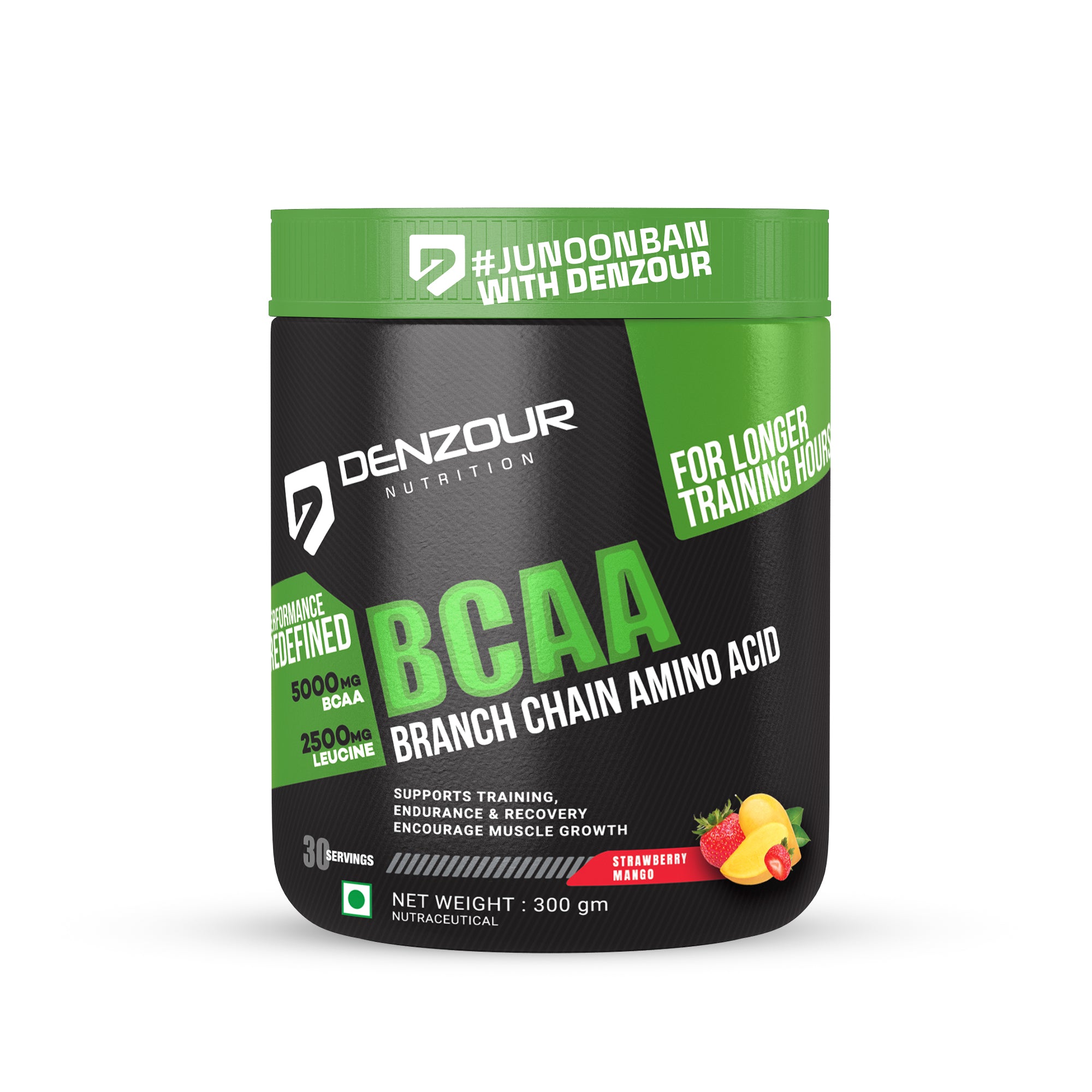
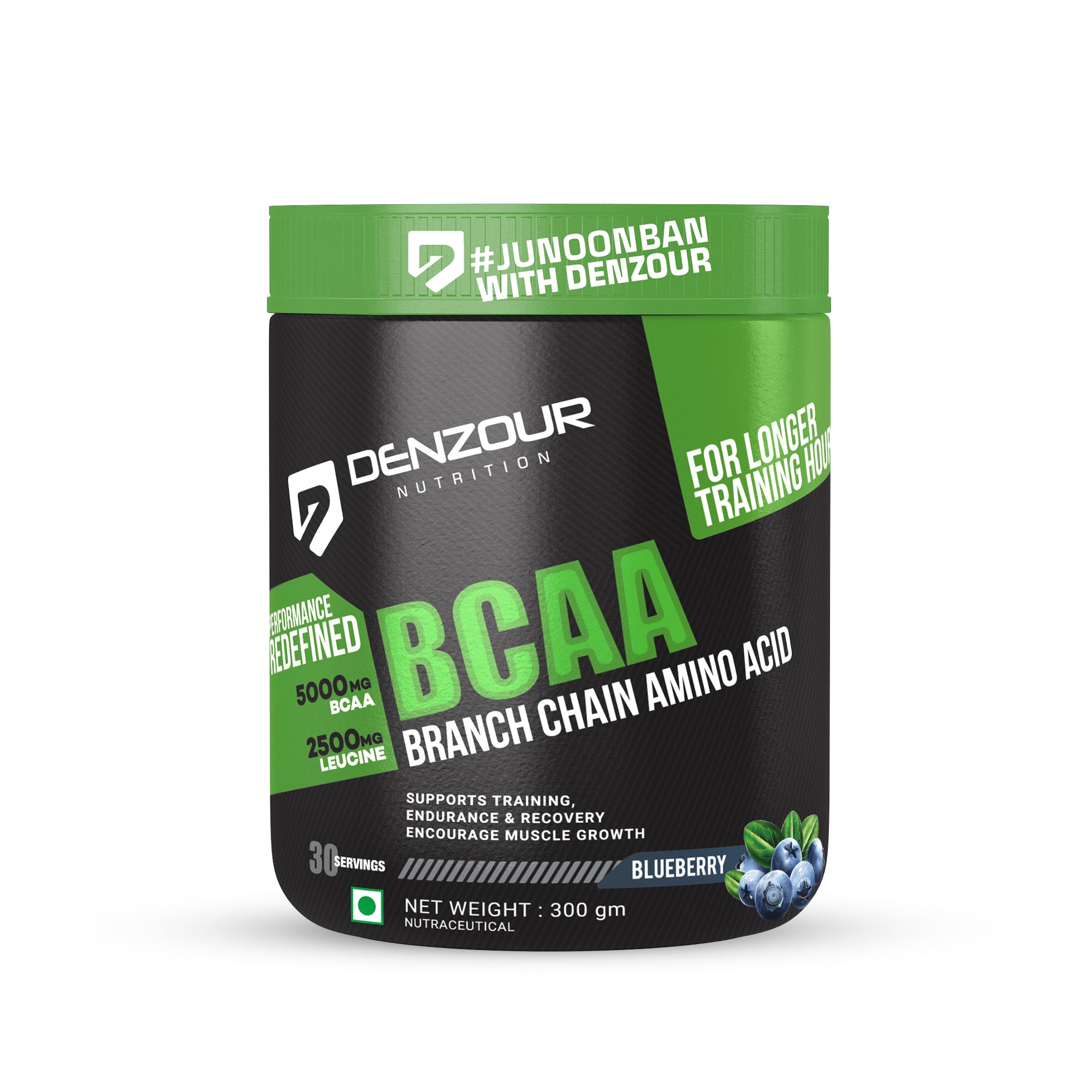
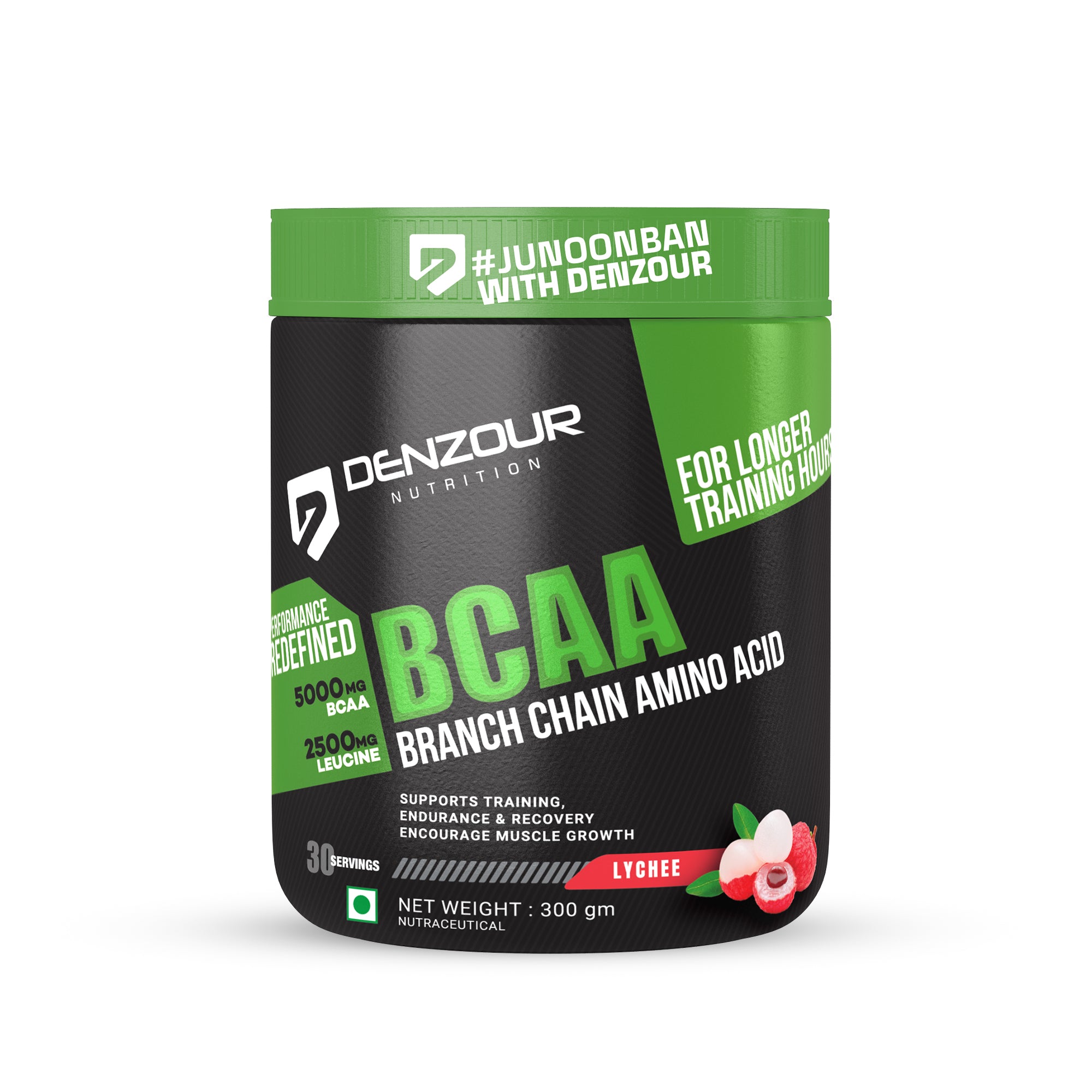
Denzour BCAA Intra-Workout
EAA vs BCAA: What Is the Real Difference?
The main difference between EAA and BCAA is simple: BCAA includes 3 essential amino acids, whereas EAA has all 9. That’s the crux of the comparison, and it’s why this debate is so important for people who care about building muscle and recovering from working out.
Let us make it easier:
- BCAA = leucine, isoleucine, valine
- EAA = every BCAA + six additional essential amino acids
And here is why that matters in practice. Muscle does not grow simply because a switch has been flipped. Muscle protein synthesis only takes place when your body has sufficient quantities of the necessary amino acids on hand to construct new muscle protein. Research reviews have contended that BCAAs alone do not generate a sufficiently potent anabolic response in humans, because the other essential amino acids quickly become the limiting factor.
Thus, the contemporary perspective towards eaa vs bcaa is practical rather than emotional. BCAA is not “bad.” It is only deficient compared to EAA. If you’re already getting enough quality protein throughout the day, adding a separate bcaa supplement may not offer much benefit. However, if you’re looking for a supplement that more directly aligns with muscle-building needs, EAA is generally the better option as it contains everything necessary to supply all essential amino acids.
How Muscle Building Actually Works
Muscle building begins when you frighten your muscles through exercise, most notably strength training such as weight lifting or resistance workouts. Your muscle fibers get small amounts of stress when you work out. This is normal. Your body starts repairing those fibers after the workout. Over time, with adequate support, this repair cycle happens over and over again causing muscles to get stronger and grow.
Your body requires three essential things to build muscle effectively: training, protein, and recovery. Growing is governed by the training. Protein provides the body with amino acids, which are the building blocks of protein. Recovery which includes sleep and rest days — allows your muscles to repair and grow stronger.
Muscle growth does not occur while you are working out. It’s what happens post-workout, when your body repairs and rebuilds. This is why you need adequate training, diet, sleep and patience for better muscle growth results.
EAA vs BCAA for Muscle Growth
When looking at EAA vs BCAA for muscle growth, EAA is often the more preferable option. Essential BCAA (branched chain amino acids) get to know 3 essential amino acids, leucine, isoleucine, and valine. These support muscle recovery and workout performance. But the body requires all 9 essential amino acids for true muscle building.
That is where EAA has an edge. By taking an EAA supplement, you are providing your body with the complete set of amino acids required to promote muscle protein synthesis the process from which muscles repair and grow. However, that doesn't mean a BCAA supplement isn't great for workout use it just doesn't stack up the same way as EAA for overall muscle-building power.
Key Points:
- BCAA= 3 Essential Amino Acids
- EAA = All 9 Essential Amino Acids
- EAA is superior for muscle growth because it is more complete
- BCAA can assist in training, but EAA aids complete muscle restoration
- For building muscle, EAA is the better option for most people
EAA vs BCAA for Recovery
In general, when it comes to recovery, EAA is superior to BCAA. It includes only 3 of the 9 (essential) aminos — leucine, isoleucine and valine. These aid in muscle recovery post workout. EAA has all 9 essential amino acids in its composition, therefore, providing the body with more complete support for muscle repair and recovery.
This is precisely why, when aiming at improved recovery from workouts and additional muscle maintenance during rest, EAA supplement is preferred over BCAA supplement by a lot of people. BCAA will come in handy, however EAA is usually the more complete choice when hard exercising or calorie deficit phases are involved.
Key points:
- Amino Acids: 3 for Recovery with BCAA
- EAA provides recovery support through all 9 essential amino acids
- EAA for muscle repair is more Advanced
- BCAA is less complex, but also not as complete
- Unless you are very specialized, EAA will be optimal for recovery.
EAA vs BCAA for Fat Loss and Cutting
When working to lose fat, the goal is not simply weight loss. Lifting while cutting calories is key for muscle preservation and building. This is where EAA vs BCAA comes into play. BCAA provides your body with three branched-chain amino acids: leucine, isoleucine and valine. EAA provides all nine amino acids that are required.
Since muscle support requires all of the essential amino acids, EAA is typically better during losing fat and cutting. It provides more comprehensive aid when you are consuming less and working out hard.
BCAA supplement may still be ok to use during workouts, but generally EAA supplement works more effectively better for those looking for recovery support geared towards lean muscle improvement whilst in a calorie deficit.
- If complete muscle support is your priority, choose EAA
- If you are looking for a more straightforward intra-workout drink, get BCAA
- Even for cutting, recovery and muscle retention EAA got the edge
- BCAA is helpful, but less so than EAA
EAA vs BCAA for Fasted Training
EAA is typically superior to BCAA for fasted training. EAA means essential amino acids and it provides your body with all nine of those essential amino acids. BCAA are just three: leucine, isoleucine, and valine.
This is important because leucine can aid in the triggering of muscle protein synthesis, but your body still needs the other essential amino acids to properly support muscle repair, recovery and muscle-building support. EAA supplement formulas are often viewed as more complete than a BCAA supplement, especially if you train on an empty stomach without eating protein beforehand.
To summarize: EAA are a better option for fasted workouts and overall support. If you're looking for a more specific amino acid formula, then go with BCAA. For the vast majority of folks adhering to fasted gym training EAA vs BCAA = EAA wins.
Who Should Choose an EAA Supplement?
An EAA supplement is a great option for anyone looking for enhanced muscle recovery, muscle maintenance and training performance support. EAA refers to essential amino acids, the amino acids your body cannot manufacture on its own.
An EAA might support your fitness routine if you train hard, stay active regularly or don’t always get enough protein from the food you eat. It can particularly come in handy on active days, at the end of a calorie deficit, or during fasted workouts when your body could benefit from extra amino acid support.
An EAA supplement may be a good option for:
- Beginners in the gym wanting to help them recover post workout
- The regular exercisers, training together a couple of times a week
- Athletes who are engaged in intense or long sessions
- Those with a calorie deficit looking to preserve lean muscle
- Individuals who work out in the morning without eating
- Or those with low protein dietary intake
In other words, EAA supplements are best suited to people who want comprehensive amino acid support for both training and recovery.
Who Should Choose a BCAA Supplement?
For those who want basic amino acid support surrounding their workouts, a BCAA supplement may be an appropriate option. BCAA’s mean branched-chain amino acids: leucine, isoleucine and valine. The three amino acids they contain are popular in fitness for their connections to muscle support and recovery.
A BCAA supplement is typically selected by individuals who work out on a regular basis and desire lightweight fluid intake pre-, intra or post-exercise. It may also suit those who don’t want a dense protein shake during training. But, it's not always needed as long as your protein needs are being met through food or a whey protein supplement.
A BCAA supplement may suit:
- Be a regular gym workout person
- Individuals who train fasted in the early morning
- Ones who want a watery intra-workout drink
- Individuals seeking recovery support for muscles
- It is ideal for people who dislike heavy shakes during their workout.
Basically, BCAA is great for the active who want smooth workout help.
Can You Take EAA and BCAA Together?
Yes, you can have EAA and BCAA at the same time, however usually it is unnecessary. Because BCAA is already contained in EAA. EAA refers to essential amino acids, and contains all nine of the essential amino acids, including the three BCAAs (leucine, isoleucine and valine). So, if you already take an EAA supplement, then you are getting BCAAs too.
The two taken together are generally safe for healthy adults but may be superfluous—combining them could mean that you’re paying more each month in supplements without much added benefit. Essential amino acid supplementation is a complex topic, but for the average consumer, selecting one good EAA product and implementing it in your diet usually would suffice as the most simple and effective choice to make.
Simple points to understand:
- Yes, you can take both at the same time
- EAA already contains BCAA
- Both of them is often extra, never compulsory
- It includes the BCAA, B (Leucine), C (Iso-leucine) and A (Valine).
- One, not both, is all most people need
- If you already take whey protein, you probably don’t need either on a regular basis
Best Time to Take EAA or BCAA
Generally, the ideal timing for EAA or BCAA is around your workout such as before, during, or after a training session. For most it is more useful at training time as this is when the body requires amino acid support for muscle repair and performance. Trained fasted then EAA before or during exercise would likely be a good option as it provides your body with key amino acids while working out.
BCAA is commonly used for workouts too, particularly for longer sessions. If you already get enough protein in your daily diet, timing is less important than overall consistency. The bottom line is taking EAA or BCAA whenever it best suits your routine and aids in consistency with training nutrition.
- Pre-workout: Good for fasted training
- During workout: Good for longer or more intense sessions
- After workout: Can support recovery
- Fasted training in the morning: EAA is usually preferred
- Whenever: Use as long it matches your routine
Side Effects and Safety
BCAA and EAA supplements are usually safe for most healthy adults when used in the appropriate amount. For much of the population, they use them before, during or after workouts with no significant issue. However, excessive use or a low-quality product can lead to mild side effects. These should complement a healthy diet, not act as a substitute for real food or daily protein intake. Do check the label, follow the serving size and choose a trusted brand.
Possible side effects may include:
- Stomach discomfort
- Bloating
- Nausea
- Headache in some people
- Off taste/ sweetness when formula is too concentrated
Who should be careful:
- People who have problems with kidneys or liver
- Pregnant or breastfeeding women
- People taking regular medicines
- Anyone with a medical condition
If you're not sure, consult a doctor or qualified health professional before taking any supplement.
Final Verdict: EAA vs BCAA — Which One Should You Choose?
If you want the short answer: EAA is typically better for most people. That’s because EAA supplies your body with all nine essential amino acids, whereas BCAA only provides three — leucine, isoleucine and valine. Your body requires all essential amino acids in order to properly support muscle growth, repair and recovery.
While BCAAs are not as a powerful muscle builder as some people make out, it can be an effective supplement for those looking for a light workout drink. BCAAs may still provide value to someone already eating adequate protein through food and/or whey protien. However, if you’re looking for more thorough support in the context of your fitness efforts, an EAA supplement is the better choice.
In simple words:
- If your goal is to recover faster, support strong muscles and providing workout nutrition, EAA is the best choice.
- BCAA is the answer if you are looking for an elemental amino acid supplement and your daily protein intake is in good condition.
Thus, unless you are an advanced training bodybuilder or athlete (in which case BCAA can be useful for specific goals), EAA wins the EAA vs. BCAA debate - it provides more complete support for most gym-goers, beginners and active people! Yet your overall diet, protein intake, training and sleep are ultimately more important. Supplements can be helpful, but strong everyday habits are what really counts.


