


Pre Workout Powder
Denzour Nutrition Pre Workout Powder is designed to boost energy, focus, endurance and muscle pump enabling you to train harder with consistency. Check out our pre workout supplements & find the one that best suits your training goal and caffeine sensitivity. For best results, take it 15–30 minutes before workout.-
Best Seller


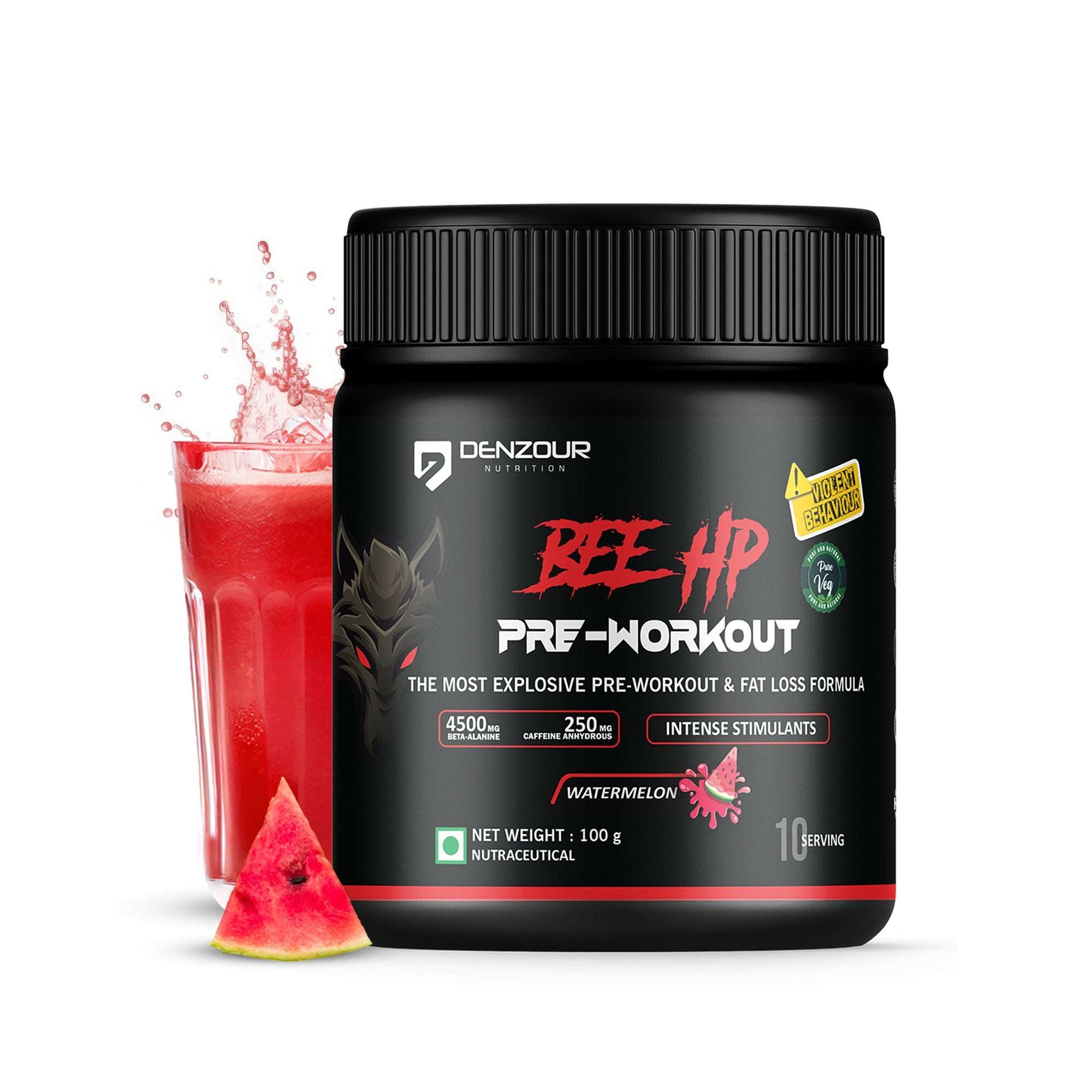


Bee hp pre workout powder- 250mg caffeine & 4500mg beta-alanine
₹449.00₹ 449 ₹ 755Product Specifications Best Before 24 Months Preference For Vegetarian Form Powder Packaging Type Jar Benefits Energy Product Flavour Blueberry, Watermelon, Lychee Weight 100gm & 300gm Gender...
-

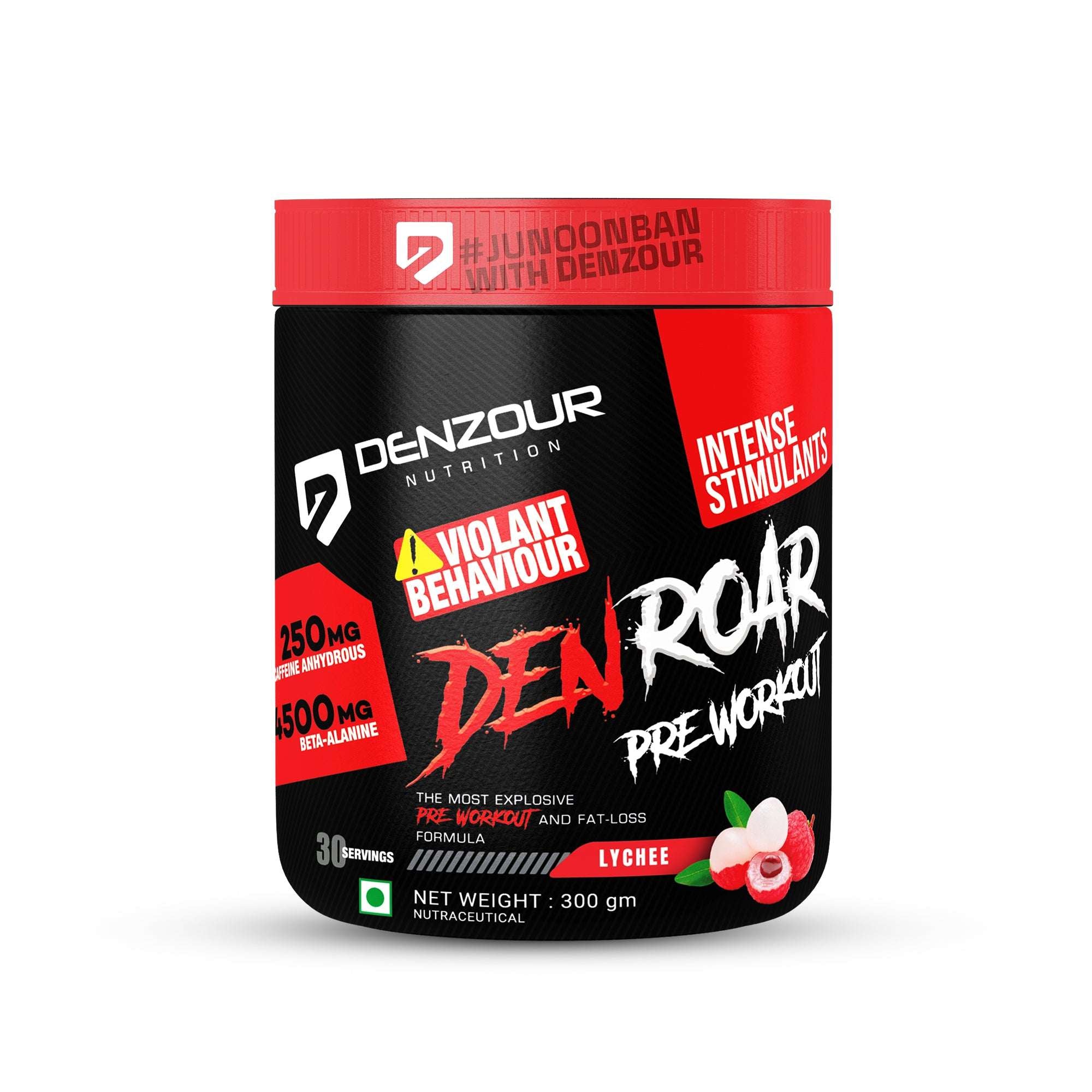

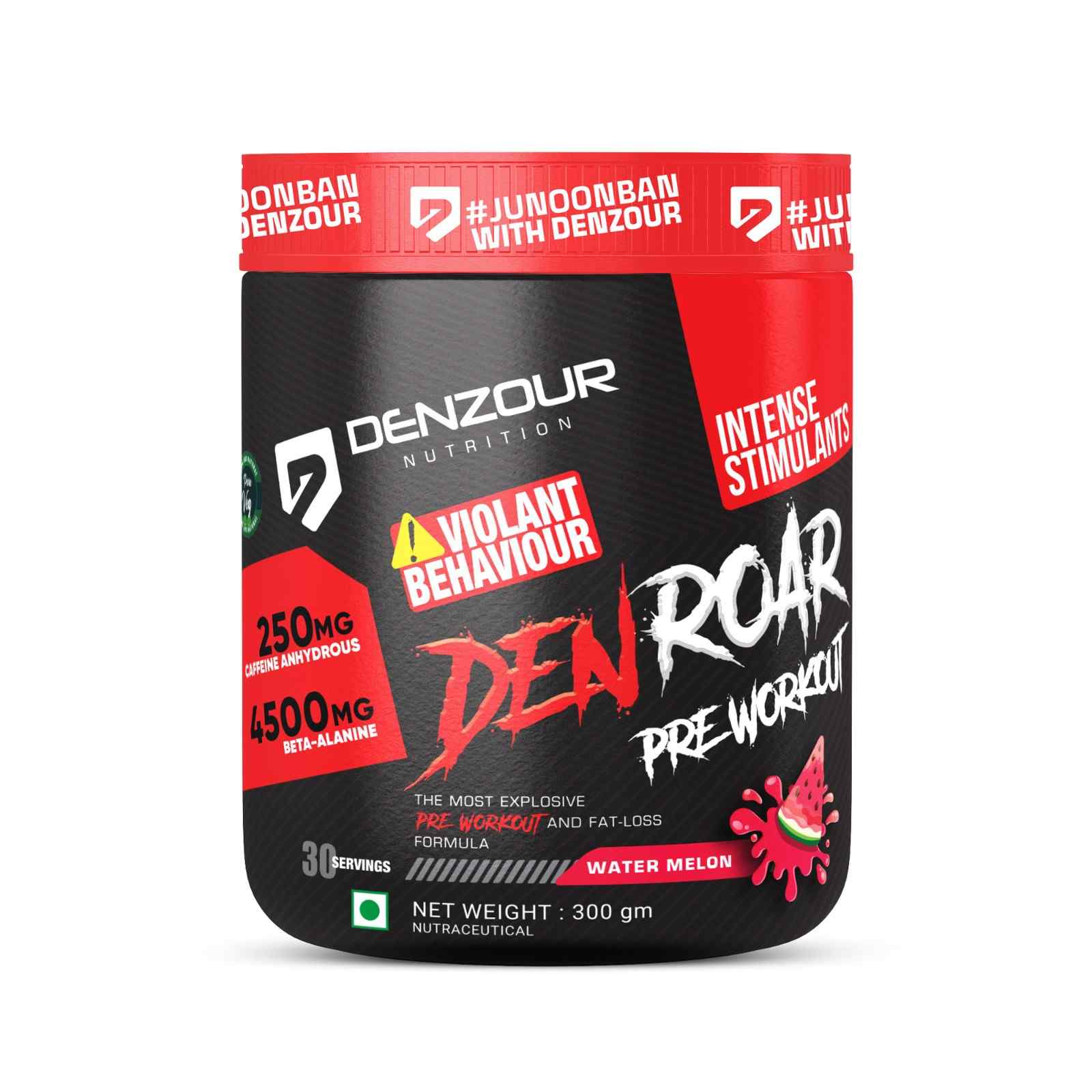
Den roar pre-workout 300g | quick muscle growth | 4500mg beta - alanine & 250mg caffeine
₹1,548.00₹ 1,548 ₹ 1,779DENROAR Pre-workout: Denzour Nutrition most explosive pre-workout and fat-loss formula prepares your body for a hardcore workout. This formula keep you focused and active and brings...
-
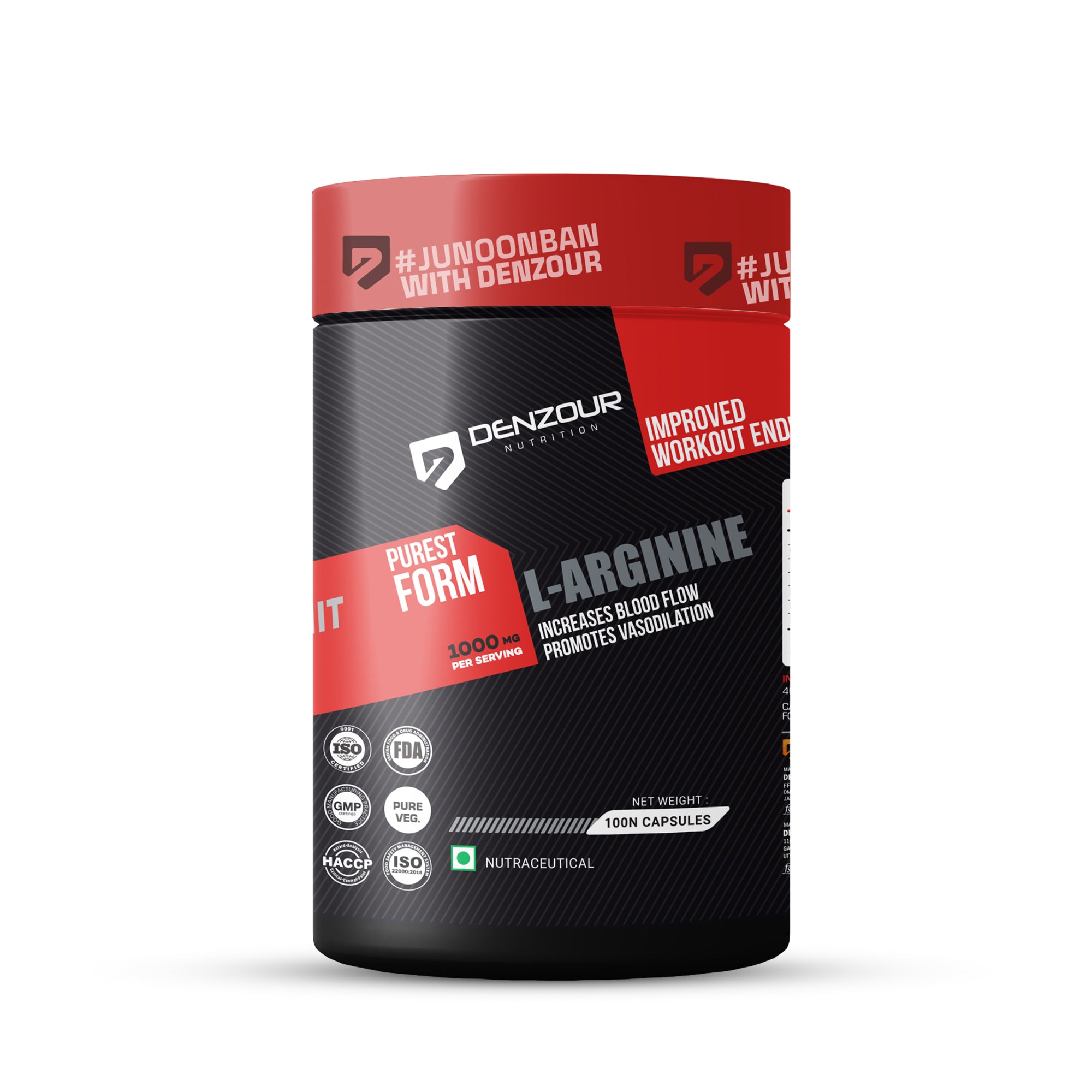
Denzour l-arginine - 100 capsules | increases blood flow | 1000mg per serving, 0g carbs
₹961.00₹ 961 ₹ 1,068Denzour L Arginine is a precursor to nitric oxide. It increases nitric oxide levels and supports enhanced blood flow to your muscles for a more intense,...
-
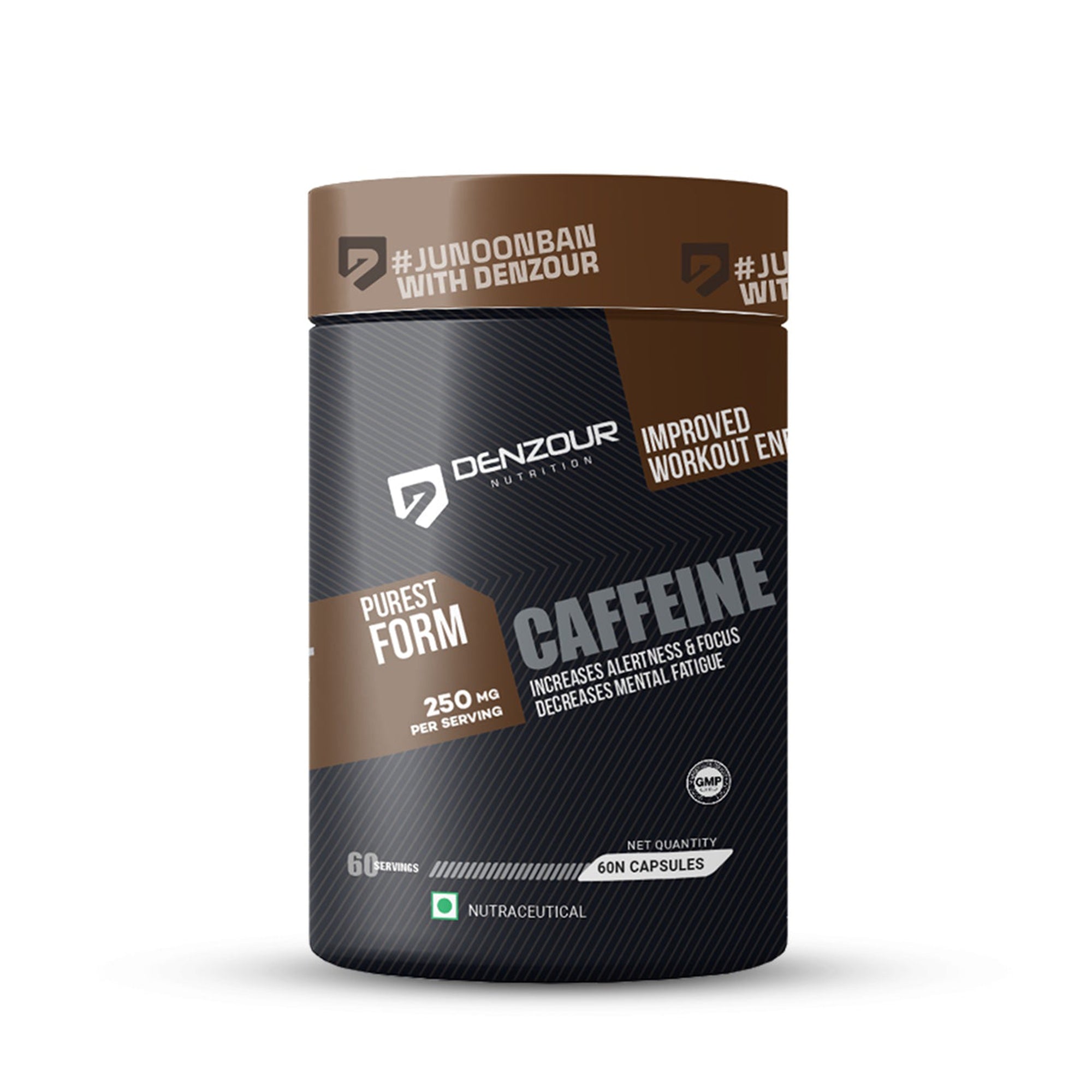
Denzour caffeine - 60 capsules | increases alertness & focus | 250mg per serving & purest form
₹1,080.00₹ 1,080 ₹ 1,200Caffeine Denzour Caffeine can provide the energy you need to get through your workouts. It can also serve as a powerful energy boost for those days that...
-
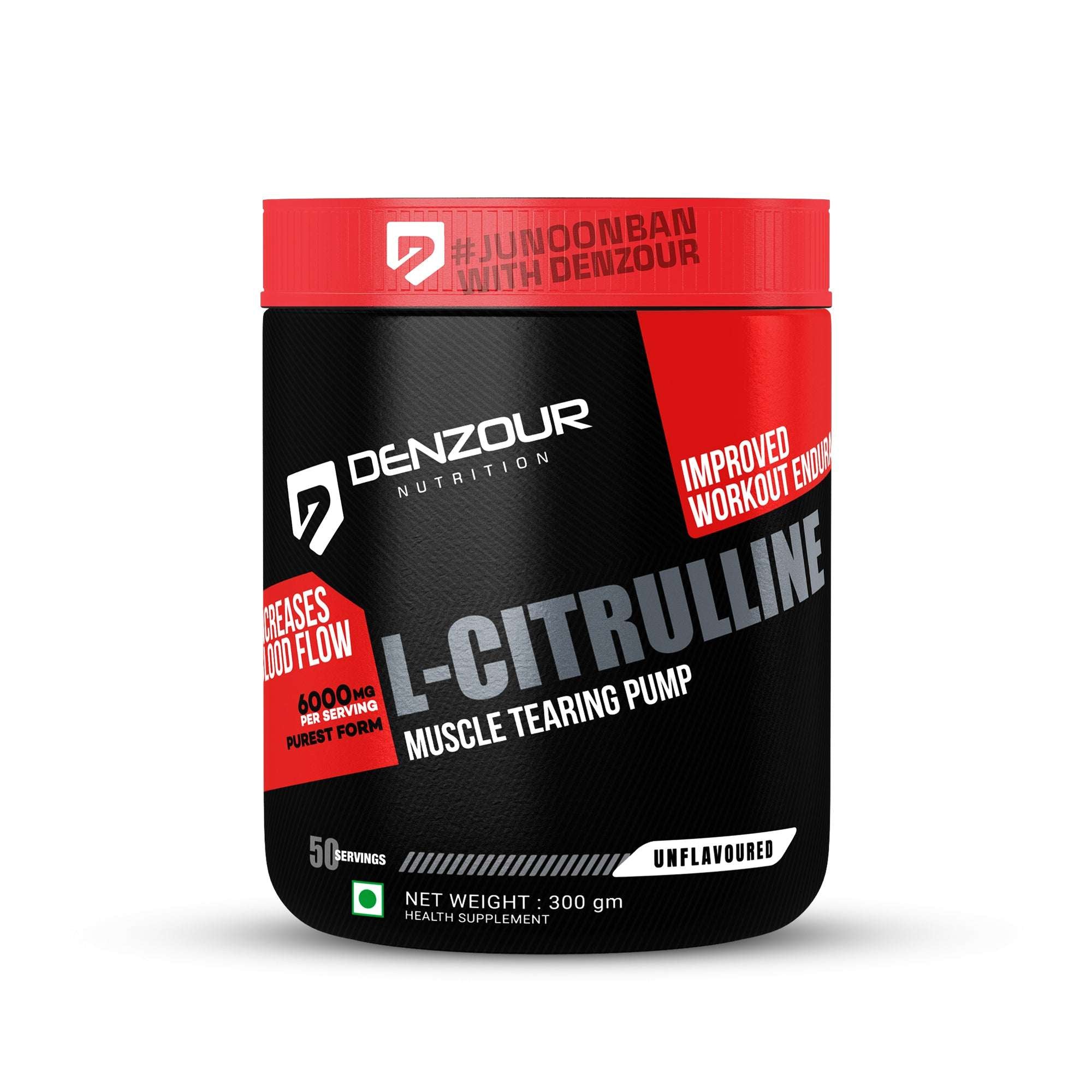
Denzour l-citrulline - 300g | muscle tearing pump | 6g per serving & unflavoured
₹1,442.00₹ 1,442 ₹ 1,602Denzour Nutrition Citrulline is the precursor of L-Arginine amino acid, which converts into nitric oxide in the body. It is an ideal ratio of 2:1 Citrulline...
-
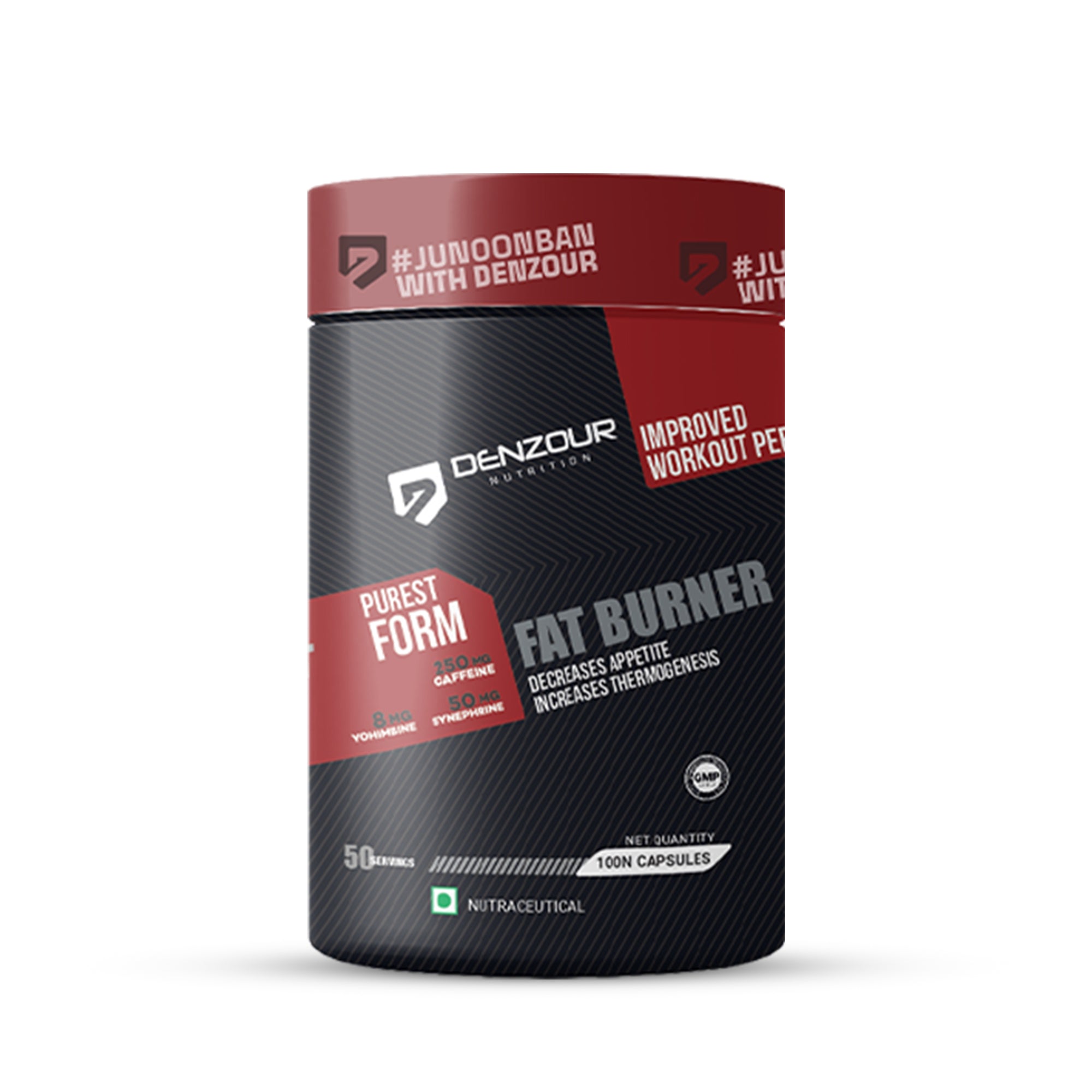
Denzour fat burner - 100 capsules | lean muscles support | 250mg caffeine, 50mg synephrine
₹1,521.00₹ 1,521 ₹ 1,690Fat Burner: Denzour Nutrition Fat Burner is a powerful and innovative supplement designed to help you achieve your weight loss and body sculpting goals. This new...


What is pre workout
Pre workout is a sports nutrition supplement that’s designed to be taken before exercise, to enhance your workout with increased energy, focus, endurance, strength and pump (the term for the sensation of muscles fullness during your training). It’s not one thing, for starters: Pre-workout is a category says Barroso, and it can be anything from a stimulant-based formula (something you take to have more energy and alertness) to pump-focused formulas (rengthened blood flow, right training feel), or performance-specific setups (You’re supporting the ability of people being able to do repeated high-intensity efforts). It is most commonly consumed as a powder dissolved in water, but it’s also found as a ready-to-drink product and in capsules. Common pre-workout ingredients include various combinations of caffeine (for energy and focus), creatine (for strength and power over time), beta-alanine (improving high-intensity work capacity, often with tingling effects) and amino-acid or pump blends like citrulline.
Generally a pre-workout supplement is taken 30–60 minutes prior to exercise in an attempt to give your active ingredients time to ‘kick in’ before you start your working sets. The best approach is to pick the formula that matches your goal and tolerance: If you train late in the evening, and respond poorly to caffeine, something without it may make more sense; if you want a strong mental kick for heavy training sessions, then perhaps a formulation containing caffeine (or even just coffee) will work well. Pre workout can positively affect your workout, but it does not take the place of sleep, hydration, a quality pre-workout meal or consistent training consider it more of a performance tool and less as the foundation. If you are new, start with half serving to test tolerance particularly with stimulant products and be mindful of using a preworkout too close to bedtime if it affects your sleep.
How Pre Workout Works
Most pre-workouts act through a couple pathways:
- Stimulate the nervous system: often caffeine → more alert and motivated
- Fatigue buffer: beta-alanine / prevents “high rep burning” say what?
- Blood flow support: citrulline/nitrates → better pumps and a more enduring feel of endurance
- Power support: creatine → enhanced short-burst performance on any given day
- Hydration aid: electrolytes→especially hot weather trainingfriendly,
Pre Workout Powder
Pre workout powder is a supplement you mix with water and drink before training, that contains ingredients shown to support better workout performance. It’s well-liked because it could help you feel more energetic and focused and prepared to push a little harder— especially on days when you’re tired, training early in the day or doing hard-as-hell sessions like heavy lifting and high volume workouts. No pre workout powder is going to replace sleep or actual food/nutritious, but it can help you train more consistently by improving your actual “start” so that you also have the ability to sustain some intensity from your first set to your last.
There are a few common goals that most pre workout powders are created around: increased energy and alertness, improved focus, greater endurance, and more pump (an increase in blood flow to the muscles resulting in larger appearing muscle). A lot of formulas, for example, have stimulants like caffeine for rapid energy, as well as performance agents such as beta-alanine for help with endurance and other compounds that aid in mental drive. Some products also contain ingredients to help hydrate the body, a benefit if you are prone to sweating profusely or train in hot conditions. Caffeine-sensitive, training late in the evening, opt for a caffeine-free or lower-stimulant so we won’t mess up your sleep.
The best pre workout powder is to use it as a performance tool, not an everyday staple. Get little, see how your body responds and adjust. Jumping right to a full serving can bring on undesirable side effects such as jitteriness, tingling and stomach upset. There is also a timing component: take it too late in the day and your sleep can suffer, and bad sleep will limit training adaptations over time.
Important points to know
- When to eat it: 15–30 minutes pre-workout
- Start with a half dose: In your first 2–3 workouts, take only half the serving size.
- Hydrate correctly: Keep well-hydrated, have a swig of water before and during your workout to feel better and train better.
- Avoid stacking stimulants: Don’t take pre workout alongside an energy drink or super strong coffee on the same day
- Monitor your sleep: if you’re training late, maybe opt for a low stim or stim free version
- Look for a mild tingle: Specific formulas can cause harmless tingling because of the endurance ingredients.
- Frequent Wins Beats the Occasional Best: Leverage it to maintain training consistency, and not as a “force” of workouts daily
How to choose the right pre workout powder
The best choice depends on the goal and tolerance. If you’re looking for energy and focus, consider a balanced formula that suits your caffeine comfort zone. If your focus in the gym is endurance and high reps, then find a product that can fuel workout stamina. If superior pumps are what you’re after, select a formula that contains ingredients added specifically to support nitric oxide release—and look for the dose of those ingredients. And if you’re new to it, don’t go for the strongest formula out there — go moderate so that you can build tolerance in a safe way.
Who should be careful
You should also avoid a high-stim pre workout in case you are sensitive to stimulants or don’t sleep well and you’ve been told to reduce your caffeine intake. There are instances where something like a caffeine-free pre workout, an amount of coffee will be much better, or even a solid pre workout meal (carbs + protein).
So in a nutshell, pre workout powder can be super useful if you apply it well. Begin with a small dosage, pick according to your goal — and use it to supplement training, not replace the fundamentals like sleep, food, and hydration.
Key advantages
- Best value per shake (usually less expensive )
- Easier to modify dosage (half of a scoop for the beginners and 1 scoop for advanced users.
- Frequently contains actual, full clinical style doses of ingredients (citruline, beta-alanine, creatine etc).
- A variety of flavors and serving sizes are available
Pre Workout Benefits
Pre-workouts can help your workout on when the formula is matched to your goal (energy, focus, endurance, strength) and flavor preference. The pros you’d feel are largely contingent on what the key ingredients inside actually are, and in particular if they feature caffeine, creatine, beta-alanine and pump ingredients like citrulline. Health and sports-nutrition research backs performance-enhancing claims for some of these ingredients, most notably caffeine and creatine
1) More Energy and Better Workout Drive
Pre-workout can be a useful tool to help motivate you to train and feel more “ready” to do so (especially on low-sleep or high-stress days) by providing a burst of energy. Stimulants such as caffeine can increase alertness and decrease perceived fatigue, allowing you to start stronger, stay even throughout and push through those tough sets with a higher intensity level.
2) Improved Focus and Mind–Muscle Connection
A lot of pre-workouts also support mental focus, which can also help you hone in on form, technique. More focus will enhance the quality of training by minimising distractions and increase uniformity between sets. It’s ideal for heavy lifting of compound moves and classic bodybuilding type workouts where mind–muscle is key for correct muscle activation.
3) Better Strength and Power Output
Some pre-workouts contain creatine, a supplement that’s extensively researched for enhancing high-intensity performance and strength long-term. Regular use may help minimize power diminish during high-work, submaximal output (eg heavy sets) and can fuel higher levels of power as well for those few seconds when you need to dig deep and keep pushing it out hard (such as sprints or explosive movements), particularly if coupled with progressive training exercises and proper nutrition.
4) Increased Training Endurance and Work Capacity
Ingredients such as beta-alanine will do a little to help you extend your tolerance of high-intensity work, in so far as they support the buffering of muscle acidity. After weeks of consistent consumption, you may experience an enhanced ability to endure more extended sets, do more reps or tackle intense interval sessions without as much “burn,” enabling you to maintain high output throughout the entire workout.
5) Better Muscle Pump and Workout “Feel”
Pump type pre-workout supplements will sometimes contain citrulline-based ingredients to get that blood flowing, which could help you maintain that “full” feeling while you are training. A better pump can make workouts more enjoyable and may enable you to train with better mind–muscle connection.
6) Improved Workout Consistency Over Time
You’re more likely to stick with your training routine when you feel empowered and focused. Pre-workout can serve as a mental on-switch: You swig, and you wing asleep to avoid getting through your session. Such tactics can help decrease workout skipping, and long-term is key to results you can see.
7) Helpful for Early Morning or After-Work Training
For those who train at 6–8 AM or awkwardly after a long workday, pre-workout might make training feel easier to start. It’ll cut through any drowsiness and increase focus, getting you warmed up nicely and hitting your first working sets with more fire in the belly – invaluable on those days when motivation is hard to summon from its hiding place.
8) Better Performance During Cutting or Dieting
Lower calories can make workouts feel harder, and your energy wane. Pre-workout can help you keep your training intensity while cutting which helps retain the strength and gym performance. It doesn’t directly incinerate fat, but it can support you to work harder—which mean better results rather than fast weight loss.
9) Supports Faster Warm-Up and Better Training Rhythm
Pre-workout can make you feel “a little more switched on,” which allows you to transition through warm-ups easier and hit your working weights with a bit more confidence. This can enhance session rhythm – less time is wasted between sets, more focus, and a more efficient overall workout – on those days that you’re in busy gyms.
10) Convenient and Easy to Use
Pre-workout powders and drinks are convenient to consume and fit easily into a routine. With each serving, one can experience a measured dose of performance ingredients. It’s also a big help to have something you can shake up and sip down prior to your workouts, which makes it easier for you to follow the same pre-training routine every time — particularly if you’re someone who gets thrown off one day based on how close it is from your last meal.
Pre-Workout Drink vs Capsules
Pre Workout Drink
A pre-workout drink (also known as RTD pre-workout: ready-to-drink) is a liquid form of pre-workout, which comes in a bottle or can – and it’s prepared, so you can just drink it from the container. It’s made for those who demand ultimate convenience, – including people who work out after clocking in — and travel frequently or don’t like to pack a shaker and powder. Like powder, an RTD also supports energy, focus, endurance and workout drive; however the main diffence here is that when it comes to RTDs speed and convenience are more important than being able to drink exactly what you want.
Key advantages
- Easiest (no mixing, no shaker)
- The same shot each time (same dose every bottle)
- Stick to just your phone and feel light on your feetPerfect for travel, office-to-gym, or outdoor workouts
Possible disadvantages
- More expensive per serving than powdered form
- Doses of ingredients lighter Perhaps there may be some RTDs (not always but true).
- More difficult to modify (e.g.you can’t “half scoop” easily)
- Bulk and storage can be a nuisance (bottles)
Pre Workout Capsules
Pre-workout capsules are the pill-based pre-workout supplement, perfect for those who don’t like to mix and drink powder, but want the benefits of a pre-training performance booster with all of its quality ingredients. Rather than a powder drink, you consume a specific amount of capsules with water before training. This is especially helpful to those who travel frequently, don’t like flavored pre-workouts, and want a very bare-bones supplement routine. Pills can do a very good job of providing energy and focus, but may not be as effective when it comes to the such a “full pump” experience because pump ingredients often require high doses, which for pills means popping lots of them.
Pre Workout Supplements: The ingredients that matter
Much advertising is all about fancy names. You’ll want to rely on science-based ingredients + transparent dosing.
1) Caffeine (energy + focus)
The primary mover in most products is caffeine. The issue is that the dose varies tremendously — some of these supplements have up to 387 mg per serving (about 2–4 cups of coffee depending on strength).
What to do:
1. If you’re new: low is good, and stay away from very high-stim formulas.
2.If you train late at night: look into stimulant free options.
2) Beta-alanine (endurance “burn” support)
Beta-alanine often causes tingling (paresthesia). For a man, it’s typically harmless but is weird if it’s new.
3) Citrulline / nitric-oxide support (pump + endurance feel)
Perfect for pumps and “training flow.” If you are aiming for pump and stamina, that’s more important than random herbs.
4) Creatine (strength + performance over time)
When you take creatine is less important than being consistent; taking it daily is what matters most. It is comfortable for athletes to include it in a pre-workout.
5) Electrolytes (hydration)
Underrated when you sweat a lot/traning on heat.
6) Avoid “proprietary blends” (when possible)
You want to know actual quantities so you are in control over only abusing stimulants and tolerance.
Pre Workout Ingredient Guide
Finding the best pre workout isn’t about hype; it’s about pairing its ingredients to your goal and tolerance.
Common ingredients that you will see in lots of pre workout powders:
Caffeine: enhances alertness and training energy (optimal in early morning or when sessions are heavy).
Beta-Alanine: aids performance endurance; harmless tingling sensation some users experience.
L-Citrulline / Citrulline Malate: A staple for pump and training feel as it promotes blood flow.
Electrolytes: assist hydration, particularly if you sweat a lot.
A good pre workout usually has some combination of energy + focus support + endurance & pump support, calibrated to your caffeine tolerance.
How to Pick the Best Pre Workout for Your Goal
Use this quick selector to help you decide the best option out of the products listed above
For Strength & Heavy Lifting
Choose an energy + focus formula that allows you to push the intensity and stay driven.
For Muscle Building (Hypertrophy / Pump Training)
Opt for a formula with pump + endurance, which can be particularly useful in high-volume sessionss.
For Beginners
This helps identify individual tolerance — start with half serving and try it for 2–3 sessions, increase only if needed.
When it comes to pre workouts, there isn’t a “best” it will depend on your goal strength (energy+focus) vs hypertrophy (pump+endurance) but also on your tolerance to caffeine.
Best Pre Workout
The best pre-workout for you isn’t the strongest one — it’s the one that complements your goal, fits in with your workout timing and works well with your stimulant tolerance. There are some people who require clean energy / focus for heavy lifting … And, there’s others who just want something non-caffeinated with a solid pump/endurance. This should have clear ingredient lists, and no “proprietary blends,” moderate to sensible doses of caffeine, and ingredients specific to whatever your training looks like.
A caffeine-free pre-workout may be a better alternative for you if: You typically train in the evening or you’re not great at handling jitters. If you train in the morning or are in need of a high stim boost, then your thing might be nothing more than a moderate caffeine based pre-workout resource (or coffee). Also, always break down the cost per serving, not just the MRP, as some tubs may look concerningly lower-pricing but give you half the servings.
What Makes a Pre-Workout Best
Matches your goal
- Energy + focus (stimulant-based)
- Pump + training feel (citrulline-based)
- Strength support (creatine daily)
- Endurance/work capacity (beta-alanine over weeks)
Transparent label
- Stay clear of “proprietary blends” that mask dosages
- Clear caffeine amount per serving
Right caffeine level for you
- “What I recommend is to start low because there’s no point in starting extremely high-stimulant.
- Evening trainers: choose caffeine-free
Good digestion and tolerance
- Begin with 1/2 serving for the first 3-4 workouts.
- Don’t take too many stimulants if you are anxious or palpitate.
Good value
- Check ₹ per serving
- Consider total servings per tub
Trusted quality
- Opt for brands that practice good manufacturing and are open with information
Pre Workout for Men
What is pre workout for men? A lot of guys look for it because they want to improve their gym performance — lifting heavier, more reps, feeling stronger in the gym, and staying consistent. But here’s the truth: the“best pre-workout for men”doesn’t have to do with gender. How you feel It’s about your goal, workout timing, caffeine tolerance and how your body responds. A quality pre-workout should help support your training without making you feel like crap with things like jitters, stomach upset or sleep issues.
Most are powders that you add to water, but there are also ready-to-drink bottles and capsules. Powders are most readily available as they offer better price to volume and also flexible dosages (half scoop or full scoop). Post-workout Drink For busy people, the simplest form is a pre-workout drink, and even easier are capsules (available for those who don’t like taste or who travel frequently).
Why Men Use Pre Workout
Men train for muscle-growth, strength-improvement, fat-burning or sports performance. A pre-workout can help in that it makes you feel better when you work out, allowing you to train harder and more consistently. The more “switched on” you feel, the more likely you are to power through difficult sets and finish your workout correctly. But pre-workout is no shortcut. Results, of course, still depend on training, diet, sleep and recovery.
Main Benefits of Pre-Workout for Men
- More energy, more motivation for the hard workouts
- Increased concentration and better mind–muscle connection
- Workout extended (more reps, better pace)
- Improved pump and feel of training (formula dependent)
- Useful while cutting/dieting and when you're low energy
What to Look for in a Good Pre-Workout
The best pre-workout is whatever fits your light. If what you’re after is energy and focus, pick a product with a moderate amount of caffeine. If pump and staying power is what you're looking for then pick a formula that specifically features traits like pump based ingredients and performance. Opt for products that have transparent labels and uses straight dosages as opposed to hiding them in “proprietary blends.”
Pro tip: If you are new to pre-workout, don’t reach for the highest stim “high stim” product first thing. Start with a lighter one, and increase very gradually if necessary.
Choosing the Right Pre-Workout for Men
- Look for performance-focused formulas
- Creatine may help long-term strength gains (usage matters most)
For pump and bodybuilding workouts
- Opt for pump-driven formulas (good blood flow and training feel.)
- Great for high volume and mind – muscle connection
For fat loss and cutting
- Opt for a mild stimulant, so you can keep the intensity up when training
- Too many things that interrupt sleep (sleep is related to fat loss folks!)
For evening workouts
- Choose caffeine-free pre-workout
- Helps avoid sleep problems
For beginners
- Start with half serving
- Track tolerance and hydration
Side Effects Men Should Know
Some guys feel awesome on pre-workout, and others gets side effects. Jitters, higher heart rate, tingling sensation, stomach upset and sleeplessness are cumulative problems. Its tingle can be a result of both beta-alanine and its own caffeine source. If you have strong jitters or anxiety, opt for a lower-stimulant or caffeine-free one. There are many stimulants on the market and if you have any heart conditions, high blood pressure or considerations you should speak with a professional before taking them.
How to Choose Right Pre-Workout for Your Training Style
Selecting the best pre-workout is not necessarily a matter of which formula has the most potent ingredients in it. It’s about picking the formula that aligns with your training style, workout schedule, experience level and personal tolerance. A solid pre-workout should do the following: set you up to start your workout on intent, train with better consistency, and finish strong — not uncomfortably.
But how many people shop for pre-workout with just one thing in mind. — “more energy.” But wise buyers tend to seek more than a quick kick. A good pre-workout can help with motivation, workout intensity, how the training feels and quality of workouts. The best option is the one that enables you to execute better in a manner that actually integrates into your routine.”
If you train pre-work, you might seek a formula that you can take and feel switched on quickly afterwards. If you train at night, perhaps you will want something lighter or lower in stimulants. If you are prioritizing muscle-building, you could seek out a pump-focused formula. If your priority is hard sets and conditioning or longer sessions, athletic endurance support becomes a bigger deal. And that is why pre workout should always start with your goal, not hype.
Understanding the Different Types of Pre-Workout Formulas
Not all pre-workouts are created for the same purpose. This is why you may have the wrong notion that comparing products only by price or flavour works.
Others are designed specifically for energy and mental focus. They are commonly selected by early trainers, heavy lifters or individuals seeking a stronger focus from their first work set. Typically favored by those that like a big pre-training kick.
Other formulas are selected based on workout feel and muscle pump. These tend to be favored by people doing high-volume sessions, bodybuilding-style training or workouts where the mind-muscle connection matters a lot. When users want more than just pure stimulant intensity, many hedonists prefer these options when they look for smoother training quality.
Next, you have performance-focused formulas that seek to support total training output. These tend to be aimed at gym-goers who want a more holistic experience: energy, stamina and focus plus better session consistency.
This is not an all-day event, so there are also simpler lighter options for those who don't want or need the heavy pre workout experience every day. Beginners and evening trainers, as well as those sensitive to stimulants, frequently prefer a gentler formula to an extremely aggressive one.
The take-home lesson is a straightforward one: the ideal pre-workout isn’t one-size-fits-all. It all depends on what type of training experience you desire.
Which Type of Pre-Workout May Suit Your Routine Best?
For morning workouts
People who train early often want a formula that seems quick, tidy and easy to use when energy is flagging and time is precious. Convenience, fast mixing and a robust start-to-session feel are essential at this point.
For strength-focused training
So for many buyers who want hard sets, heavy compound lifts and stronger training intent, they prefer a formula that better supports energy and focus with a more driven training mindset. It should feel powerful but also within reach.
For hypertrophy and high-volume sessions
For all of the purposes about training for muscle-building, people desire a pre-workout that supports training feel, motivation, session quality and overall output. It is not just about maximum intensity but intention to keep the quality from rep one to rep many!
For conditioning or fast-paced workouts
Circuit work, cardio based sessions and higher rep training often sit well on a pre workout that doesn't leave you feeling overly heavy. Many users, therefore, tend to like something that supports exertion and rhythm without overly complicating the session.
For evening workouts
Users who use the late-day period generally have to carefully consider. A pre-workout that packs a punch in the afternoon might seem too intense close to bedtime. And for this group, balance or moderation or a lighter option is often the smarter move.
For beginners
The point here is that, if you are completely new to pre-workout, maximum intensity should not be your cardio on day one. What you want is something that gives you some insight into your own tolerance and preferences.” A small initial load is typically preferable to an overwhelming introduction.
What Smart Buyers Check Before Buying a Pre-Workout
Before adding any pre-workout to your cart, take a minute to ask a few practical questions.
First, what kind of sessions do you actually do? Heavy strength days, high-volume bodybuilding workouts, conditioning work, circuits, or mixed training all feel different. Your pre-workout should support the type of effort you do most often.
Second, how sensitive are you to stimulants? Some people can handle stronger formulas comfortably. Others feel restless, shaky, or unable to sleep if the dose is too aggressive. Choosing a product that matches your tolerance usually leads to a better long-term experience than simply choosing the strongest option.
Third, how often will you use it? If you train almost every day, you may want a formula that feels balanced and practical for regular use. If you only want it for your toughest sessions, you may prefer a stronger workout-day option.
Fourth, is the label easy to understand? A clean and transparent label helps you know what you are taking. Buyers should be able to understand the purpose of the formula instead of guessing what is inside.
Finally, look at value realistically. A product that appears cheaper at first glance may not actually offer better value if the serving count is low or if the formula does not match your needs. Price matters, but price per useful serving matters more.
How to Read a Pre-Workout Label Like a More Informed Buyer
When you get a pre-workout label, it should be clear what the story is. You should be able to know what the product is trying to do for you.
Start with the serving size. A scoop also should be logical, and the product needs to feel simple enough to use. Then examine whether the formula looks balanced or seems to be centered mostly around one effect. Products some obviously making2 for powerful stimulation Others are more built around training feel, pump support or a smoother all-round experience.
Also be aware of how many servings are in the jar. This is important for both budgeting and routine. Someone who trains four to six days a week is going to think about value differently than someone who takes pre-workout once or twice per week.
Mixability and flavour thesaurally matter more than one might think. The less palatable a product is to drink day in and day out, the harder it will be for you to stick with it. Convenience matters in real life. As a general rule, a pre-workout should be easy to prepare and fit into your normal training flow.
Another good sign is clarity. Buy products that ensure it comes easy for the buyer to understand what he actually is taking often give extra confidence than simply constructed around exaggerated phrases.
Why Pre-Workout Choice Matters in Indian Conditions
Pre-workout purchase in India involves some practical aspects that can easily be missed. Heat, humidity, long commutes, irregular meal timing and post-work training all influence how a product feels.
A desk-sitting long office absorber may not want to feel too heavy but would benefit from support that makes them feel mentally switched on. Someone who trains in hot conditions might think more about hydration habits and general workout comfort. Someone with a busy agenda might prioritize convenience and easy mixing over flashy claims.
That is why a quality pre-workout isn’ just what sounds badass on promo. It should feel operational in your actual environment. A solution that suits your way of life generally brings much more satisfaction than one that seems to be robust solely on paper.
Common Mistakes Buyers Make When Choosing a Pre-Workout
The most common error is to think that stronger is always better. A formula that is too strenuous can make the session more miserable, not more productive.
Another mistake is ignoring timing. Something that works well in a morning sweat can be the wrong fit late at night.
And many buyers overlook value per serving. They compare jar price, not how long the product will last or how well it meets their actual training needs.
What Makes a Good Pre-Workout Worth Buying?
A good pre-workout should feel familiar. It should back your training in a way that you want to go ahead and use them again, not a type of extreme as soon as and let everyone down later.
Consistency matters. Clear positioning matters. Ease of use matters. So do taste, trust and the capacity to choose a formula that meets your particular training goal.
Avoiding both of these pitfalls is just a start; for many gym-goers, finding the best pre-workout comes down to what allows them to develop a repeatable routine. It allows them to show up, train with greater intention and maintain consistency week after week. That sort of product often does a better job of creating long-term value than something built solely around a dramatic first impression.
How to Use Pre Workout Correctly (Timing + Serving)
When to take: Pre workout is best taken 15–30 minutes before training.
Start low: If you’re a newbie, start with ½ serving.
Hydration is important: Be sure to drink water before and during training.
Avoid late night use: Stimulants can impact sleep if you work out in the evening.
The majority of people consume pre workout 15–30 minutes prior to working out and will generally begin with a half serving size to gauge their tolerance.
Safety Notes (Read Before Use)
Pre workout supplements are great to support training efforts, but be responsible with them especially if the formula has stimulants.
Who should be extra careful
- Caffeine-sensitive users: If the dose is too much, you might experience jitters, feelings of anxiety or a rapid heartbeat. Start with ½ serving.
- Individuals with heart or blood pressure issues: Seek advice from a competent health professional prior to using stimulant-based pre workouts.
- Pregnant or nursing women: Avoid stimulant-based supplements unless advised otherwise by your doctor.
- People on medications: If you use prescription drugs (particularly for heart, blood pressure, thyroid or anxiety), check with a professional before trying it.
How to use safely
- Start low & read your tolerance: Use ½ serving for first 2–3 sessions.
- Do not overdo it: More is not necessarily better — higher doses can raise the risk of side effects.
- Do not stack stimulants: Do not take pre workout along with energy drinks, high-caffeine coffee or fat burners in the same time frame.
- Avoid late-night use: Stimulants can interfere with sleep. Lack of sleep can hamper performance and recovery.
- Hydrate: If you sweat a lot, pre workout works most effectively with adequate water intake.
Possible side effects (depends on sensitivity)
Jitteriness, tingling (from beta-alanine, available in some products), mild digestive discomfort, or sleep disturbance if taken late. Discontinue use and seek medical advice if you feel unusual symptoms.
Who Should Avoid Pre Workout Supplements?
Pre-workout supplements are not for everyone. Do not take pre workout powders if any of the following apply:
Pre-Workout: Don’ts Be Careful If You are.
- Under 18 years old
- Pregnant or breastfeeding
- You’ve got heart problems, high blood pressure or have palpitations.
- Anxiety/panic issues that are exacerbated by stimulants or difficulty with anxiety.
- Responsive to caffeine or stimulants (jitters, headaches, don’t sleep well)
- Using medicines in which stimulants may combine (such as some blood pressure, thyroid, antidepressant, or cold medications)
Be extra careful (or skip) if you: - Elevated in the evening (if you are sensitive to caffeine, stimulant pre-workouts at this time could disrupt your sleep)
- Already drink a significant amount of caffeine (coffee/energy drinks) and may go over your daily limit
- Have stomach acid or digestion problems and pre-workout doesn't agree with you
Safety tips - Never use more than the recommended dose indicated on the label.
- Beginner: ½ serving for 3-4 workouts if new to product.)
- Do not take pre-workout alongside other sources of caffeine on the same day
- If you are sick or take many medications, seek advice from a qualified expert before use
Pre Workout Stacks
Desire more for your workouts? You can “stack” your pre workout powder with other supplements according to your goal. Stacking isn’t about taking more stimulants — it’s about combining products that assist in different areas of performance.
Stack 1: Strength + Muscle (Most popular)
Pre Workout Powder + Creatine (daily)
Creatine is frequently utilized to help enhance strength performance and training output. Use creatine, mix with water and follow label instructions for pre-workout – only one suggestion would be per their directions; a serving should not be consumed 5 hours prior to bed.
Best for: strength training days, progressive overload, regular gym users.
Stack 2: Pump + High-Volume Training
Pre Workout Powder + Citrulline (pump support)
If you want a poweder to increase the pump for high-volume sessions, citrulline is found in many pre-workouts. Begin with a low dose and gauge how you feel.
Suitable for: bodybuilding workouts, high-rep training, pump-focused sessions.
Stack 3: Cutting / Fat-Loss Training
Pre Workout Powder + Electrolytes + Structured Diet
Diet and training input will be the main cutting aspects. Many people combine pre-workout with electrolytes to aid hydration (particularly if they sweat a lot).
Best for: fat loss phases, morning cardio + weights, high volume training / difficult sessions while on low calories.
Stack 4: Endurance & Conditioning
Pre Workout Powder + Hydration + Carbs (as needed)
If you are also doing long sessions, hydration and carbohydrates can matter as much or more than stimulants. For longer sessions, add some water and consider a small carb snack ahead of training if it fits into your plan.
Best for: conditioning, sports training, extended workouts.
Key Features: Not to be used as a meal replacement. Half a scoop for sensitivity assessment or between 3-6 hours before training. Do not exceed more than 2 servings per day.
